Keeping University Classrooms Running

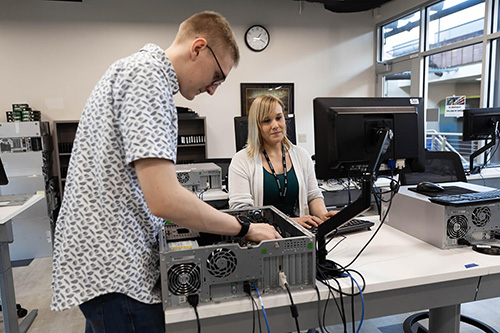
Most of my work happens five minutes before something is supposed to start. That is when the calls come in. A projector that worked yesterday suddenly will not power on. A screen that refuses to lower. A classroom computer frozen on a login screen while thirty students take their seats. I grab my bag and move fast, not because I like the rush, but because there is no room for delay.
I support classroom technology at a university. Projectors, podium computers, microphones, cables that disappear even when no one touches them. I know which rooms have outlets that fail intermittently and which ones need to be reset twice before they behave. I memorize those details because no one else has time to.
The morning starts early. I check tickets that came in overnight. A faculty member who cannot access slides. A classroom that lost audio during an evening lecture. A freshman in a residence hall who does not know how to plug in an ethernet cable and is convinced the internet is broken. I answer calmly. Confusion escalates fast if you let it.
I drink coffee that goes cold before I remember it is there. I move from building to building with a badge that gets me through doors most people never notice. The hallways are quiet then, echoing in a way they never do later in the day. I like that part. Before everything starts demanding attention at once.
Cables vanish constantly. HDMI cords walk off. Adapters end up in backpacks by accident or intention. I carry extras because asking questions wastes time. If a professor is already flustered, the fastest way to calm the room is to fix the problem without commentary.
There is a rhythm to it. Enter the room. Assess quickly. Power cycle. Check connections. Replace what should not be missing. When it works, the class proceeds as if nothing happened. That is the goal. The smoother it looks, the less visible my work becomes.
I handle calls from all directions. Freshmen who have never used wired internet and think wireless should reach everywhere. Graduate students convinced their laptop is incompatible with everything. Professors who click links they should not and then panic when the screen fills with pop ups promising lottery winnings. I remove viruses quietly and reset passwords without judgment. Embarrassment helps no one.
I have to stay on top of technology because the environment never slows down. Updates roll out. Software changes. Hardware ages out without warning. I keep notes in my head about which fixes are temporary and which rooms need attention later. Those notes pile up by midweek.
What most people do not see is the planning behind the calm. I test equipment during off hours. I walk rooms that are empty, checking ports, labeling cables, making sure things are where they should be. When classes start, it is too late to prepare. You can only react.
There are moments when I feel invisible. When everything works, no one asks how. When something fails, eyes turn to me immediately. I accept that trade. It is part of the job. Still, some days the imbalance sits heavier than others.
By midday, my legs ache from stairs and my phone buzzes constantly. I keep my tone even. I explain the same thing multiple times without irritation. Staying steady is not optional here. A room full of people depends on it.
When the last class ends, I circle back through buildings. I reset rooms for tomorrow. I coil cables neatly. I make notes about what needs replacing. The campus empties slowly. My work winds down without ceremony.
I leave knowing tomorrow will look much the same. Another round of last minute fixes. Another set of problems solved quietly. It is the life I have settled into, whether anyone notices or not.
The middle of the week is when fatigue shows up in small ways. Not exhaustion, just a constant awareness that I need to stay sharp. One missed detail can turn into a room full of waiting students. I double check things more than I used to. Experience teaches you where mistakes hide.
Some days are nothing but small fixes. A battery replaced here. A setting toggled there. Other days bring larger problems. A server outage. A software conflict that hits multiple rooms at once. Those days stretch longer. I move faster but think slower, forcing myself to stay methodical.
I work with a team, but much of the time I am alone in rooms meant for dozens. I talk to myself sometimes, narrating steps out loud so I do not skip anything. It helps more than I expected when I started doing it.
I notice how people react to technology failing. Students get restless. Professors grow frustrated or embarrassed. Everyone wants the problem resolved immediately, even if they do not know what the problem is. I act as the buffer between expectation and reality.
There is satisfaction in restoring function. Not pride exactly, but relief. When the screen lights up and the lecture continues, the room exhales. I step back and fade into the background. That is how it should be.
What wears me down is the repetition without acknowledgment. I do not need praise, but I notice the absence. The assumption that things work on their own. That cables reconnect themselves. That software updates do not require planning. I remind myself that invisibility is a sign of success here.
I keep learning because I have to. New systems arrive without training. Old ones break without warning. I read documentation on my own time. I test things before anyone else uses them. Staying ahead is the only way to stay calm.
By late afternoon, calls slow. I take inventory. I respond to emails that piled up earlier. I close tickets with brief notes no one will read unless something breaks again.
I pack up my bag and walk through the last building. Lights dim. Screens go dark. The campus settles. My body finally notices how tired it is.
There are days when I wonder how long this balance holds. Being needed constantly but thanked rarely. Being relied on but not remembered. I push that thought aside and focus on what I can control.
Tomorrow will bring another set of problems. I will fix them. The room will move on. I will remain where I am, steady and prepared.
That is the job.
Late one afternoon, I ran into a sequence of issues that kept repeating. Different rooms, same symptoms. Projectors losing signal. Computers dropping connections. It was not random anymore.
I paused between calls and pulled up a page on the internet. The biggest benefit of my job is plenty of time on the internet. I read this article while waiting for the next call. It’s a good way to clear the mind. After that break I adjusted the standard cable layout I had been using and updated my notes. The next room held steady. So did the one after that. The calls slowed.
I finished the day without rushing. I reset the remaining rooms, closed my tickets, and shut down my laptop. The familiar tiredness settled in, but my head felt clear.
I locked the equipment room and stepped outside. The campus was quieter than usual. Evening light hit the buildings at an angle that made them look almost calm.
Tomorrow, something else will break. A cable will vanish. Someone will click a link they should not. I will fix it.
For now, everything works. That is enough.
Comments
Join the discussionNo comments yet. Be the first to comment.